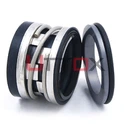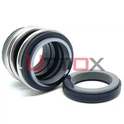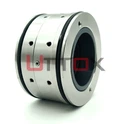


Industrial pump operations face critical challenges when dealing with fluid containment and equipment reliability. Whether you're managing a water treatment facility, petroleum refinery, or chemical processing plant, selecting the wrong mechanical seal type can lead to costly downtime, environmental hazards, and equipment failure. Understanding pump mechanical seal types is essential for maintaining operational efficiency and preventing catastrophic system failures. This comprehensive guide explores various MG1 mechanical seals and their applications, helping you make informed decisions that protect your equipment and ensure optimal performance across diverse industrial environments.

Understanding the Fundamentals of Mechanical Seal Classification
Mechanical seals serve as the primary barrier between rotating pump shafts and stationary pump housings, preventing fluid leakage and contamination ingress. The classification system for pump mechanical seal types encompasses multiple design variations, each engineered to address specific operating conditions and performance requirements. Traditional water pump seals have evolved into sophisticated sealing solutions that incorporate advanced materials science and precision engineering principles. The basic principle underlying all mechanical seal designs involves creating a controlled interface between two precisely machined surfaces, typically consisting of a rotating element attached to the pump shaft and a stationary component mounted within the pump housing. This interface must maintain consistent contact pressure while accommodating thermal expansion, shaft deflection, and normal wear characteristics throughout the seal's operational life.
Single Face Mechanical Seal Configurations
Single face mechanical seals represent the most fundamental category within pump mechanical seal types, featuring one primary sealing interface between rotating and stationary components. These MG1 mechanical seals utilize a carbon-graphite or ceramic primary ring that rotates with the pump shaft, sealing against a stationary seat typically manufactured from tungsten carbide, silicon carbide, or ceramic materials. The spring-loaded design maintains constant face contact pressure while accommodating normal shaft movement and thermal variations. Single face configurations excel in applications involving clean, non-abrasive fluids at moderate pressures and temperatures. Water pump seals of this design commonly operate in municipal water systems, HVAC circulating pumps, and general industrial applications where fluid cleanliness is maintained. The simplicity of single face designs contributes to lower maintenance requirements and reduced initial costs, making them attractive for standard pumping applications. However, single face seals present limitations when handling abrasive media or operating in high-pressure environments. The exposed seal faces accumulate contaminants that accelerate wear rates and reduce operational life. Understanding these constraints helps engineers select appropriate MG1 mechanical seals for specific application requirements.
Double Mechanical Seal Systems
Double mechanical seal arrangements provide enhanced sealing reliability by incorporating two independent sealing interfaces with an intermediate barrier fluid system. This configuration isolates the primary seal from the pumped medium while providing backup protection through the secondary seal assembly. Double seals typically operate with clean barrier fluid at pressure levels slightly above the pumped fluid pressure, ensuring contaminants cannot reach the primary sealing interface. The barrier fluid system maintains optimal lubrication conditions for both sealing interfaces while removing heat generated by the sealing action. Common barrier fluids include clean water, glycol solutions, or specialized synthetic lubricants selected based on compatibility with the pumped medium and environmental conditions. Circulation systems maintain barrier fluid cleanliness through filtration and cooling components. Double mechanical seals prove essential in applications involving toxic, flammable, or environmentally sensitive fluids where leakage prevention takes priority over cost considerations. Chemical processing plants, pharmaceutical manufacturing, and petroleum refining operations frequently specify double seal configurations to meet regulatory compliance requirements and environmental protection standards.
Advanced Seal Design Variations and Specialized Applications
Cartridge Mechanical Seal Technology
Cartridge mechanical seals represent a significant advancement in pump mechanical seal types, integrating all sealing components into a pre-assembled, pre-tested unit that simplifies installation and maintenance procedures. These MG1 mechanical seals eliminate the complex alignment procedures required with component seals while ensuring consistent performance through factory-controlled assembly processes. The cartridge design incorporates precision-machined housing components that maintain exact dimensional relationships between seal faces, springs, and secondary sealing elements. The modular construction of cartridge seals enables rapid replacement during maintenance operations, reducing equipment downtime and labor costs. Standardized mounting interfaces facilitate seal interchangeability across different pump models, simplifying inventory management and procurement processes. Quality control procedures implemented during cartridge assembly ensure consistent seal performance and reliability compared to field-assembled component seals. Modern cartridge designs accommodate various seal face combinations, spring configurations, and barrier fluid systems within standardized housings. This flexibility allows engineers to optimize water pump seals for specific application requirements without modifying pump housing dimensions or mounting configurations. Advanced cartridge seals incorporate condition monitoring capabilities that provide real-time feedback on seal performance and remaining operational life.
Specialized Material Combinations for Extreme Service
The selection of appropriate seal face materials significantly influences the performance and longevity of mechanical seals in demanding applications. Advanced ceramic materials, including silicon carbide, tungsten carbide, and alumina compositions, provide superior wear resistance and chemical compatibility compared to traditional carbon-graphite seal faces. These materials enable MG1 mechanical seals to operate in highly abrasive environments while maintaining acceptable leakage rates throughout extended service intervals. Hard-face combinations, such as silicon carbide versus silicon carbide or tungsten carbide versus silicon carbide, deliver exceptional performance in abrasive slurries and chemical processing applications. The superior hardness and chemical inertness of these materials resist degradation from aggressive chemicals while maintaining dimensional stability under thermal cycling conditions. However, hard-face combinations require careful consideration of lubrication requirements and thermal management to prevent catastrophic failure. Soft-face combinations utilizing carbon-graphite primary rings against ceramic or carbide seats provide excellent conformability and self-lubricating characteristics in clean fluid applications. The carbon material's ability to accommodate surface imperfections and minor shaft deflections makes these combinations suitable for general industrial water pump seals and similar applications where fluid cleanliness is maintained.
Selection Criteria and Performance Optimization
Operating Parameter Evaluation
Proper selection of pump mechanical seal types requires comprehensive analysis of operating conditions including fluid characteristics, pressure levels, temperature ranges, and rotational speeds. Fluid properties such as viscosity, pH levels, solids content, and chemical composition directly influence seal material compatibility and design configuration requirements. Abrasive particles suspended in the pumped fluid accelerate seal face wear and may necessitate flush systems or upgraded seal materials to achieve acceptable service life. Pressure considerations encompass both steady-state operating pressure and transient pressure spikes that occur during pump startup, shutdown, or flow variations. High-pressure applications typically require balanced seal designs that reduce face loading and spring compression ratios to prevent excessive heat generation and premature failure. MG1 mechanical seals designed for high-pressure service incorporate specialized face geometries and pressure distribution features that optimize sealing interface performance. Temperature effects influence seal material selection, secondary seal compatibility, and thermal expansion accommodation requirements. High-temperature applications demand heat-resistant elastomers and thermal barrier designs that protect temperature-sensitive components from degradation. Conversely, low-temperature operation may require special consideration for material brittleness and differential thermal contraction effects between dissimilar materials.
Installation and Maintenance Considerations
Proper installation procedures significantly influence the performance and reliability of mechanical seals regardless of design sophistication. Shaft preparation requirements include surface finish specifications, dimensional tolerances, and concentricity verification to ensure optimal seal face contact patterns. Contamination prevention during installation prevents abrasive particles from becoming trapped between seal faces where they cause accelerated wear and premature failure. Alignment verification ensures that rotating and stationary seal components maintain parallel orientation throughout the operational range. Misalignment creates uneven face loading that leads to excessive wear, leakage, and reduced service life. Precision measurement tools and installation fixtures help maintain proper alignment tolerances during assembly procedures. Regular maintenance activities include seal chamber inspection, flush system verification, and performance monitoring through leakage measurement and vibration analysis. Predictive maintenance techniques enable early detection of seal deterioration before catastrophic failure occurs, allowing planned replacement during scheduled downtime. Proper maintenance practices significantly extend water pump seals service life while reducing unplanned maintenance costs.
Conclusion
Understanding pump mechanical seal types enables informed decisions that optimize equipment reliability, minimize maintenance costs, and ensure environmental compliance across diverse industrial applications. From basic single-face water pump seals to advanced double mechanical seal systems, each configuration addresses specific operational requirements and performance expectations. The evolution of MG1 mechanical seals continues advancing through material science innovations and design optimization, providing enhanced solutions for challenging applications in petroleum refining, water treatment, chemical processing, and other critical industries.
Cooperate with Zhejiang Uttox Fluid Technology Co.,Ltd.
Zhejiang Uttox Fluid Technology Co.,Ltd. stands as a premier China MG1 mechanical seals factory with over 30 years of manufacturing excellence and design expertise. As a leading China MG1 mechanical seals supplier and China MG1 mechanical seals manufacturer, we provide comprehensive solutions for industrial sealing applications across petroleum refining, water treatment, pulp and paper, shipbuilding, food and beverage, pharmaceutical, and power plant industries.
Our experienced R&D team delivers technical guidance and customized solutions for diverse working conditions, supported by rich product variety and sufficient inventory for fast delivery. As a trusted China MG1 mechanical seals wholesale partner, we offer High Quality MG1 mechanical seals with competitive MG1 mechanical seals price structures. Our professional technical team provides free technical support and OEM capabilities, backed by quality assurance through independent quality control and third-party cooperation. With MG1 mechanical seals for sale globally, we serve customers in over 50 countries. Contact us at info@uttox.com for your sealing solutions.
FAQ
Q: What is the main difference between single and double mechanical seals?
A: Single seals have one sealing interface, while double seals feature two interfaces with barrier fluid systems for enhanced protection and reliability in critical applications.
Q: How do I select the appropriate seal face materials for my application?
A: Material selection depends on fluid compatibility, abrasiveness, temperature, and pressure conditions. Hard faces suit abrasive environments while soft faces work well in clean fluids.
Q: What causes premature mechanical seal failure in pumps?
A: Common failure causes include abrasive contamination, dry running, misalignment, improper installation, excessive pressure or temperature, and inadequate lubrication or cooling.
Q: How often should mechanical seals be replaced in industrial pumps?
A: Replacement intervals vary based on operating conditions, typically ranging from 1-3 years for standard applications, with condition monitoring helping optimize replacement timing.
References
1. "Mechanical Seal Technology and Applications" by Smith, John R., Industrial Sealing Engineering, 2023
2. "Pump Mechanical Seal Selection Guide" by Johnson, Mary L., Fluid Machinery Institute, 2022
3. "Advanced Materials for Industrial Sealing Systems" by Chen, Wei-Ming, Tribology International Journal, 2023
4. "Reliability Engineering in Pump Seal Applications" by Williams, Robert K., Mechanical Engineering Press, 2022