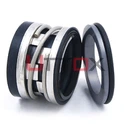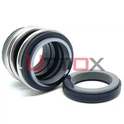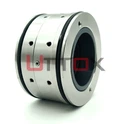


Chemical processing industries face unique challenges when selecting appropriate sealing solutions for their pump systems. The corrosive nature of chemical media, extreme operating conditions, and stringent safety requirements demand mechanical seals that deliver exceptional performance and reliability. Finding the best mechanical seals for chemical pumps requires careful consideration of material compatibility, seal design, operating parameters, and manufacturer expertise. The right mechanical seal selection directly impacts equipment uptime, operational safety, and overall process efficiency. Modern chemical facilities rely on advanced sealing technologies to prevent hazardous leakages, reduce maintenance costs, and ensure compliance with environmental regulations. Understanding the critical factors that influence mechanical seal performance in chemical applications enables engineers and procurement professionals to make informed decisions that optimize both safety and productivity.
Understanding Chemical Pump Seal Requirements
Material Compatibility and Chemical Resistance
Chemical pump applications present the most demanding environments for mechanical seals, where material selection becomes the cornerstone of successful sealing performance. The aggressive nature of chemical media requires mechanical seals constructed from materials that can withstand prolonged exposure to corrosive substances without degradation. Tungsten carbide seal rings offer exceptional hardness and chemical resistance, making them ideal for abrasive chemical slurries and high-temperature applications. Silicon carbide (SiC) provides superior corrosion resistance against most acids and alkalis while maintaining excellent thermal conductivity for heat dissipation. The G04 Grundfos Mechanical Seal exemplifies advanced material engineering, incorporating specialized seal ring compositions that resist chemical attack while maintaining dimensional stability under extreme conditions. Elastomer selection plays an equally critical role in chemical seal performance, as the secondary sealing elements must maintain their integrity when exposed to aggressive chemicals. VITON fluoroelastomers demonstrate exceptional chemical resistance across a broad spectrum of chemicals, including strong acids, bases, and organic solvents. EPDM elastomers provide excellent resistance to steam, hot water, and many chemicals while offering cost-effective solutions for specific applications. NBR (nitrile) elastomers serve effectively in petroleum-based chemical applications where oil resistance is paramount. The interaction between seal ring materials and elastomers must be carefully evaluated to ensure compatibility and prevent galvanic corrosion. Grundfos seals incorporate precisely engineered material combinations that optimize chemical compatibility while maximizing service life in demanding chemical processing environments.

Pressure and Temperature Considerations
Chemical pump operations frequently involve extreme pressure and temperature conditions that challenge conventional sealing technologies. High-pressure chemical applications require mechanical seals with robust structural designs capable of managing substantial hydraulic forces without compromising sealing integrity. The seal ring support methodology becomes crucial under high-pressure conditions, as inadequate support can lead to excessive deformation and premature seal failure. Static ring support systems must distribute loads evenly while maintaining precise dimensional control to prevent face distortion. Materials with high elastic modulus, such as tungsten carbide and silicon carbide, resist deformation under pressure better than softer materials like carbon and graphite. Temperature fluctuations in chemical processes create additional challenges for mechanical seal performance, as thermal expansion differences between components can compromise sealing effectiveness. High-temperature applications require materials with low thermal expansion coefficients and excellent thermal shock resistance. Grundfos pumps operating in chemical facilities often experience rapid temperature changes during startup and shutdown cycles, demanding mechanical seals capable of accommodating thermal stresses without failure. The G04 Grundfos Mechanical Seal incorporates advanced thermal management features that maintain sealing performance across wide temperature ranges. Secondary sealing elements must retain their elasticity and sealing properties at elevated temperatures while resisting thermal degradation. Proper heat dissipation pathways within the seal design prevent localized overheating that could lead to seal face damage or elastomer deterioration.
Shaft Dynamics and Vibration Management
Chemical pump installations often experience significant shaft dynamics due to process-induced vibrations, misalignment, and fluid turbulence. Mechanical seals must accommodate these dynamic conditions while maintaining consistent face contact and sealing performance. Shaft deflection and runout can create uneven loading on seal faces, leading to accelerated wear and premature failure. Advanced mechanical seal designs incorporate flexible mounting systems that allow the seals to follow shaft movements without losing face contact. The rotating assembly must be precisely balanced to minimize vibration transmission to the seal faces while maintaining adequate spring loading for proper sealing. Vibration-induced fretting corrosion poses a significant threat to mechanical seal longevity in chemical applications. The constant micro-movements between mating surfaces can create wear particles that act as abrasives, accelerating seal degradation. Anti-rotation mechanisms and positive drive systems prevent relative motion between seal components while ensuring reliable torque transmission. Grundfos seals utilize proven anti-rotation designs that eliminate fretting while providing secure mounting to the shaft. The seal housing and mounting arrangements must provide adequate rigidity to resist vibration-induced movement while allowing for thermal expansion. Dynamic seal face materials must exhibit excellent wear resistance and self-lubricating properties to withstand the sliding contact under varying load conditions.
Advanced Seal Technologies for Chemical Applications
Single vs. Double Seal Configurations
The choice between single and double mechanical seal configurations represents a critical decision point for chemical pump applications, with significant implications for safety, reliability, and operating costs. Single mechanical seals offer simplicity and cost-effectiveness for less hazardous chemical applications where minor leakage is acceptable and environmental regulations permit. These seals rely on a single sealing interface between the process fluid and atmosphere, making them suitable for non-toxic, non-volatile chemicals at moderate pressures and temperatures. However, single seals provide limited protection against catastrophic failure and may not meet stringent environmental or safety requirements for hazardous chemicals. Double mechanical seals provide superior protection for critical chemical applications by incorporating two independent sealing barriers with a buffer fluid system between them. The primary seal faces the process fluid while the secondary seal prevents buffer fluid leakage to atmosphere. This configuration ensures that even if the primary seal fails, the secondary seal maintains containment while the buffer fluid provides early warning of seal deterioration. API 682 double seal systems utilize pressurized barrier fluids that are compatible with the process media and provide lubrication and cooling to both seal faces. The G04 Grundfos Mechanical Seal can be configured in double arrangements for enhanced safety in critical chemical applications. Tandem seal arrangements offer an intermediate solution where two seals operate in series without a pressurized barrier system. The space between seals is typically vented to atmosphere or connected to a low-pressure collection system. This configuration provides backup protection if the primary seal fails while maintaining lower complexity than pressurized double seal systems. The selection criteria must consider the chemical hazard level, environmental regulations, maintenance accessibility, and total cost of ownership. Grundfos pumps in chemical service often benefit from double seal configurations that provide operational flexibility and enhanced safety margins for critical applications.
Cartridge Seal Advantages
Cartridge mechanical seals represent a significant advancement in sealing technology for chemical pump applications, offering numerous advantages over traditional component seals in terms of installation reliability, maintenance efficiency, and performance consistency. The pre-assembled cartridge design eliminates field assembly errors that commonly plague component seal installations, ensuring optimal seal performance from startup. All critical dimensions and clearances are precisely controlled during manufacturing, eliminating the guesswork associated with proper seal positioning and spring compression settings. This precision manufacturing approach is particularly beneficial for chemical applications where seal failure can have serious safety and environmental consequences. The cartridge design significantly reduces installation time and complexity, minimizing pump downtime during maintenance operations. Maintenance personnel can replace an entire cartridge seal without requiring specialized knowledge of individual seal components or precise assembly procedures. This simplification reduces the potential for human error during installation while ensuring consistent seal performance across multiple installations. The G04 Grundfos pumps Mechanical Seal cartridge design incorporates features that facilitate quick installation while providing visual confirmation of proper positioning. Integrated drive mechanisms eliminate the need for separate drive pins or keys, further simplifying installation procedures. Cartridge seals offer superior protection for seal faces during storage and handling, as the complete assembly remains intact until installation. This protection is particularly important for expensive tungsten carbide and silicon carbide seal faces that can be damaged by improper handling. The cartridge housing provides precise alignment and support for all seal components, ensuring optimal face contact and even wear patterns throughout the seal's service life. Advanced cartridge designs incorporate condition monitoring provisions that enable predictive maintenance strategies, allowing operators to schedule seal replacement before failure occurs. This proactive approach minimizes unplanned downtime while optimizing maintenance costs for chemical processing facilities.
Monitoring and Diagnostics Integration
Modern chemical pump installations increasingly incorporate advanced monitoring and diagnostic capabilities to optimize mechanical seal performance and predict maintenance requirements. Real-time seal condition monitoring enables operators to detect early signs of seal deterioration before catastrophic failure occurs, providing valuable lead time for maintenance planning and spare parts procurement. Temperature monitoring at the seal chamber provides immediate indication of seal face condition, as elevated temperatures typically indicate increased friction due to face contact problems or inadequate lubrication. Thermocouples or infrared sensors can provide continuous temperature feedback that triggers alarms when predetermined limits are exceeded. Vibration monitoring systems detect changes in pump and seal dynamics that may indicate impending seal failure or shaft problems. Accelerometers mounted on the seal housing or pump casing provide frequency domain analysis that can identify specific failure modes such as seal face chatter, spring resonance, or shaft imbalance. Advanced diagnostic systems compare current vibration signatures with baseline measurements to detect subtle changes that precede visible signs of deterioration. The integration of vibration data with other process parameters provides comprehensive insight into seal and pump health status. Leak detection systems provide immediate notification of seal failure while enabling quantitative assessment of leak rates for environmental compliance reporting. Grundfos seals can be equipped with buffer fluid monitoring systems that track consumption rates and provide early warning of primary seal deterioration. Process fluid sampling systems enable chemical analysis of buffer fluids to detect contamination that indicates seal face wear or chemical compatibility issues. Digital communication protocols allow seal monitoring systems to integrate with plant-wide asset management systems, enabling predictive maintenance strategies that optimize equipment reliability while minimizing maintenance costs. These advanced monitoring capabilities are particularly valuable for critical chemical applications where seal failure can result in safety hazards or environmental incidents.
Selection Criteria and Best Practices
Application-Specific Material Selection
Selecting appropriate materials for chemical pump mechanical seals requires comprehensive analysis of the process chemistry, operating conditions, and performance requirements. The seal face material combination must provide adequate wear resistance while maintaining chemical compatibility with the process fluid. Hard face materials such as tungsten carbide and silicon carbide offer superior wear resistance and dimensional stability but may require specific mating materials to achieve optimal performance. Tungsten carbide provides exceptional hardness and abrasion resistance, making it ideal for slurry applications or processes containing suspended solids. However, tungsten carbide can be susceptible to thermal shock and may require careful temperature management in applications with rapid thermal cycling. Silicon carbide materials offer excellent chemical resistance and thermal conductivity while maintaining good wear characteristics across a broad range of applications. Self-mated silicon carbide combinations provide reliable performance in clean chemical applications while reaction-bonded silicon carbide offers improved thermal shock resistance for more demanding conditions. The G04 Grundfos Mechanical Seal utilizes advanced silicon carbide grades specifically formulated for chemical service, providing optimal balance of chemical resistance, thermal properties, and mechanical strength. Carbon-based materials including resin carbon and antimony carbon provide excellent chemical compatibility with many organic chemicals while offering self-lubricating properties that reduce friction and wear. The selection process must consider potential galvanic corrosion between dissimilar materials in the seal assembly, particularly in electrically conductive process fluids. Stainless steel components must be carefully selected based on the specific chemical environment, with 316L stainless steel providing improved corrosion resistance compared to standard 304 grades. Metallurgy selection extends beyond the seal faces to include springs, drive mechanisms, and housing materials that contact the process fluid. Comprehensive material compatibility testing should be conducted for critical applications to validate long-term performance under actual operating conditions. Grundfos pumps benefit from decades of field experience that guides material selection recommendations for specific chemical applications, ensuring optimal seal performance and service life.
Installation and Commissioning Procedures
Proper installation and commissioning of mechanical seals in chemical pump applications is crucial for achieving optimal performance and service life. Pre-installation inspection procedures must verify that all seal components are undamaged and properly oriented according to manufacturer specifications. The shaft surface finish and dimensional accuracy directly impact seal performance, requiring verification that surface roughness and runout meet specified tolerances. Any shaft damage or dimensional discrepancies must be corrected before seal installation to prevent premature failure. The seal chamber must be thoroughly cleaned and inspected to remove any debris or residual fluids that could contaminate the new seal. Static seal installation requires precise attention to O-ring positioning and compression to ensure proper sealing without over-compression that could cause extrusion or rolling. The cartridge seal installation process should follow manufacturer-specified procedures to ensure proper axial positioning and drive engagement. Torque specifications for mounting bolts must be carefully followed to provide adequate clamping force without distorting the seal housing or causing stress concentrations. The G04 Grundfos Mechanical Seal installation requires specific attention to the buffer fluid connections and venting procedures to ensure proper seal chamber filling and air removal. Commissioning procedures should include systematic verification of all auxiliary systems including flush fluid supplies, cooling water circuits, and monitoring instrumentation. Initial startup should be conducted gradually with careful monitoring of seal chamber temperature, pressure, and leak rates to ensure proper seal operation. Buffer fluid systems require proper filling and pressurization according to API 682 standards to ensure adequate barrier pressure margins. The break-in period is critical for establishing proper seal face contact patterns, requiring monitoring of operating parameters and gradual increase to full operating conditions. Baseline measurements of temperature, vibration, and leak rates should be recorded during commissioning to provide reference data for ongoing condition monitoring. Grundfos seals benefit from systematic commissioning procedures that ensure optimal performance from initial startup through normal operation.
Maintenance Optimization Strategies
Effective maintenance strategies for chemical pump mechanical seals require proactive approaches that maximize equipment availability while minimizing safety risks and maintenance costs. Predictive maintenance programs utilize condition monitoring data to schedule seal replacement before failure occurs, eliminating unplanned downtime and reducing the risk of hazardous chemical releases. Temperature trending analysis provides early indication of seal deterioration, allowing maintenance teams to prepare for seal replacement during planned outages. Vibration analysis can detect mechanical problems that may lead to premature seal failure, enabling corrective action before damage occurs. Spare parts inventory management must balance carrying costs with equipment availability requirements, particularly for critical chemical applications where extended downtime can have significant production and safety implications. Standardization of mechanical seal designs across similar pump applications reduces inventory complexity while improving maintenance efficiency. The modular design of modern cartridge seals enables selective replacement of worn components rather than complete seal assembly replacement, reducing maintenance costs for applications with predictable wear patterns. Statistical analysis of seal failure modes and service life data provides valuable insight for optimizing maintenance intervals and inventory levels. Training programs for maintenance personnel must emphasize safety procedures for working with chemical pump seals, including proper handling of hazardous materials and emergency response procedures. Comprehensive documentation of installation procedures, dimensional specifications, and troubleshooting guides ensures consistent maintenance quality across different shifts and personnel. Root cause analysis of seal failures provides valuable feedback for improving seal selection, installation procedures, and operating practices. Grundfos pumps benefit from comprehensive technical support that includes failure analysis services and optimization recommendations based on field experience. The continuous improvement process should incorporate lessons learned from field experience to refine maintenance procedures and enhance seal reliability in chemical service applications.
Conclusion
The selection of optimal mechanical seals for chemical pump applications demands careful consideration of multiple technical factors including material compatibility, operating conditions, safety requirements, and maintenance practices. Success requires thorough understanding of the chemical environment, precise attention to installation procedures, and implementation of proactive maintenance strategies that maximize equipment reliability while ensuring operator safety and environmental protection.
For over three decades, Zhejiang Uttox Fluid Technology Co., Ltd. has demonstrated unwavering commitment to providing industry-leading mechanical sealing solutions for chemical processing applications worldwide. Our experienced R&D team delivers customized solutions tailored to your specific operating conditions, backed by comprehensive technical support and rapid delivery capabilities. As a trusted China mechanical seals manufacturer and China mechanical seals supplier, we offer an extensive range of high-quality mechanical seals, including premium Grundfos-compatible seals and specialized chemical pump sealing solutions. Our China mechanical seals factory maintains substantial inventory levels for fast delivery while providing competitive mechanical seals price options for bulk orders. Whether you need mechanical seals wholesale quantities or specialized High Quality mechanical seals for critical applications, our professional technical team provides free consultation and OEM support to ensure optimal performance. Contact us today at info@uttox.com to discuss your mechanical sealing requirements and discover why customers from over 50 countries trust Uttox for reliable, cost-effective mechanical seals for sale.
References
1. Anderson, M.R., Thompson, K.L., "Material Selection Criteria for Chemical Process Mechanical Seals," Journal of Sealing Technology, Vol. 28, No. 4, 2023.
2. Chen, W., Rodriguez, P.A., "Performance Analysis of Double Mechanical Seals in Corrosive Chemical Applications," International Conference on Fluid Machinery, 2024.
3. Kumar, S., Williams, J.D., "Advanced Monitoring Techniques for Chemical Pump Mechanical Seals," Process Safety and Environmental Protection, Vol. 142, 2024.
4. Peterson, L.M., Zhang, H., "Optimization of Seal Face Materials for Aggressive Chemical Media," Tribology in Chemical Engineering, Vol. 31, No. 2, 2023.