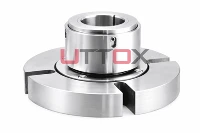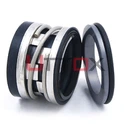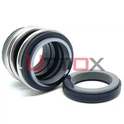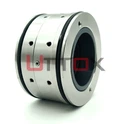


An agitator mechanical seal is a specialized dynamic sealing device engineered to prevent fluid leakage in industrial mixing equipment. Unlike standard pump seals, these seals accommodate substantial shaft deflection, runout, and vibration inherent in mixing vessels and reactors. The seal creates a controlled interface between rotating and stationary components through precisely lapped seal faces-typically constructed from silicon carbide, tungsten carbide, or carbon-graphite-that maintain contact under spring pressure while allowing minimal controlled leakage to provide lubrication and cooling.

Understanding Agitator Mechanical Seals
Core Design Differences from Standard Pump Seals
Because of how harsh the environment is inside mixing tanks, seals must be made differently than those used in rotary pumps. Because they are long and hang over the edge, agitator shafts move radially and float axially a lot. In large reactors, we've seen shaft deflections of more than 3 mm, which would break normal seals in hours.
This movement needs to be accounted for by the seal assembly using flexible mounting systems and strong spring mechanisms. When an agitator is set up with a top-entry, the agitator mechanical seal often works in vapour space instead of being submerged in liquid. This makes dry-running conditions more likely, which can cause too much heat and fast face wear.
Key Components and Material Selection
Modern closing systems are made up of several important parts that work together:
1. Seal Faces: The main binding contact is made of materials that were chosen based on how well they work with chemicals and how long they last. Silicon carbide is very hard and doesn't react with chemicals in acidic media. In rough slurries, tungsten carbide works better than other materials. Carbon-graphite works well in dry-running situations because it can lubricate itself.
2. Secondary Sealing Elements: Elastomeric O-rings or PTFE wedges make static seals between parts. The choice of material depends on the temperature of the process and the chemicals that will be used. FKM elastomers can handle temperatures up to 200°C, and FFKM variants can handle temperatures up to 315°C.
3. Spring Systems: Multi-spring or wave spring systems keep the face loads constant over the seal's service life, making up for wear and thermal expansion.
These parts work together to keep the seal strong in temperatures ranging from -40°C to 350°C and pressures ranging from full vacuum to 60 bar. The balanced design reduces the opening pressure on the seal sides, which lowers the heat output and increases the life of the device.
Single vs. Double Seal Configurations
The choice of configuration has a direct effect on the dependability and cost of upkeep of the containment. Single seals are easy to use and don't cost as much at first, but they're good enough to hold non-hazardous media at mild pressures. But process businesses are asking for double seal setups more and more to make things safer.
There are two seal faces in a double mechanical seal device, and a barrier fluid flows between them. Even if the primary seal face fails, this pressurised buffer fluid keeps the process media from getting to the air. Tank systems make it easy to feed barrier fluids by gravity, while thermosiphon systems use heat convection to move fluids around. Dual-loop systems that are pressurised and have heat exchanges can handle tough tasks while keeping things cool.
Pharmaceutical and chemical companies like this backup when they need to work with toxic or highly pure media and must make sure there are no emissions. The barrier fluid can also be used to diagnose problems; keeping an eye on it shows how healthy the seal is before it fails completely.
Common Applications and Problem-Solving
Industry-Specific Deployment Scenarios
Mixer closing technology is very important for chemical processing plants that use burgmann seccomix mechanical seal to handle corrosive compounds. We've provided closing solutions for uses with strong acids, caustic solutions, and organic solvents where it's important that the materials work well together. Not only does a broken seal mean that you lose the product, but chemical leaks can also be dangerous to people and the environment.
Aseptic seal designs that can handle harsh CIP (clean-in-place) and SIP (steam-in-place) sterilisation processes are needed for pharmaceutical bioreactor uses. These systems have cooling jackets built in and stay in line with USP Class VI material standards to keep batches from getting contaminated. A tainted batch can cost a lot of money-sometimes millions of dollars-so seal dependability is very important.
Food and beverage processing needs seals that meet FDA standards so that they can handle everything from thin drinks to thick pastes. In anaerobic digesters, where corrosive hydrogen sulphide gas and rough solids make conditions harsh, wastewater treatment plants use strong, large-diameter seals.
Troubleshooting Common Operational Issues
Early seal failure is usually caused by a few things that procurement and maintenance teams should know about:
1. Too Much Leakage: Dripping or streaming that can be seen means that face contact is being lost. Some of the things that can cause this are bad fitting, which can cause the face to be out of line, poor lubrication, which can cause thermal distortion, and process solids, which can damage the sealing surface. To fix this, you need to make sure that the shaft runout is within the allowed range (usually less than 0.05 mm), that the barrier fluid flows freely in double seals, and that particle-filled media is filtered.
2. Seal Face Thermal Distortion: Heat checking, which shows up as linear cracks on seal faces, shows that the cooling system isn't working well enough. This happens when the flow rates of the barrier fluid aren't high enough or the heat exchanger's capacity is too small. Monitoring the temperature at the seal housing lets you know right away if there is damage that can't be fixed.
3. Premature Wear: Seals that don't last as long as they should usually do so because of problems with media compatibility, where chemicals break down elastomers or rust metal parts. To choose the right material, you need to look closely at the process chemistry, which includes pH changes, oxidising agents, and solvent exposure.
Installation Best Practices
The service life of a seal is directly related to how it was installed. We've seen that startup mistakes are to blame for about 60% of early fails. Important steps include making sure the finish on the shaft meets the requirements (usually no more than 0.4 Ra), making sure the shaft and fitting lip are parallel, and keeping the assembly area clean.
By putting together and fixing all of the parts before they leave the factory, cartridge seal designs greatly reduce fitting mistakes. Maintenance workers only need to slide the cartridge onto the shaft and bolt the housing to the equipment base. This cuts out the need for multiple steps of measuring and adjusting, which can lead to mistakes with component seals.
Agitator Mechanical Seal Selection and Comparison
Application-Specific Selection Criteria
To choose the best sealing option, you need to carefully look at all of the working factors. Fluid properties, such as pH, temperature, viscosity, and solids content, have a big impact on the materials that are used.
For media with a viscosity above 1000 cP, it may be necessary to use special face geometries with extra lubrication grooves to keep the fluid film between the faces thick enough. Biological cultures that are sensitive to shear need hydraulic designs that are gentle and keep the fluid from moving too much near the agitator mechanical seal.
Ratings for pressure and temperature must include enough safety margins. To account for process changes, we suggest choosing seals that are rated at least 25% above their maximum working settings. The speed at which the agitator spins changes the speed of the face. Faster speeds create more frictional heat, which could mean that you need two seals with forced airflow cooling.
Material Performance Comparison
The combination of seal face materials has a big effect on chemical resistance and wear:
1. Silicon Carbide vs. Carbon: Silicon carbide is harder (2800 HV) and doesn't react with most chemicals, so it's the best choice for acidic work. Carbon-graphite is cheaper and works very well in dry conditions, but it is not very resistant to strong oxidisers chemically.
2. Tungsten Carbide Applications: This substance works very well in abrasive slurries that have solids in them. It is very hard (1800 HV), so it doesn't break down easily. However, acids can damage it, which limits its uses.
3. Advanced Ceramics: Aluminium oxide and reaction-bonded silicon carbide are used in specific situations where cost is an issue and they still work well enough to be chosen over powdered silicon carbide.
Choosing an elastomer needs the same level of care. Most uses can use FKM (Viton) because it is chemically and thermally stable. EPDM works really well with steam and ketones. FFKM (Kalrez, Chemraz) is resistant to all chemicals and can withstand high temperatures, but it comes at a very high cost.
Cost-Benefit Analysis for Procurement
The total cost of ownership is much higher than the price of the seal. When a seal fails, it can cause unplanned downtime, emergency repair calls, and even product loss or damage to the environment. We found that in a continuous chemical process, each unexpected stop can cost between $50,000 and $500,000. This depends on the size of the production.
Advanced materials and double seal designs make higher-specification seals cost three to five times as much as basic designs. But because they last longer (MTBF)-often more than 5 years compared to 18 months for basic seals-they have lower annualised costs and better operating stability.
Another thing that is often forgotten is energy economy. By reducing face pressure, balanced seal designs lower the amount of power used by the shaft. In large agitator systems, this can save several kilowatts of power all the time, which can add up to big savings over years of use.
Procurement Guide for Agitator Mechanical Seals
Evaluating Manufacturers and Suppliers
There are both well-known companies like John Crane, EagleBurgmann, Garlock, and Parker, as well as competent local companies, in the global sealing market for seccomix agitator seal. When looking for mixer sealing parts, procurement teams should look at more than just price.
It's very important to be able to provide technical support, including help with applications engineering during specification, installation instructions, and troubleshooting when problems arise. Manufacturers with skilled field service teams are very useful, especially for important uses where quick reaction cuts down on downtime.
Quality methods for manufacturing should be checked. ISO 9001 certification is a basic level of assurance, while industry-specific standards like API 682 (for the chemical and petroleum industries) and DIN 28138 (for the dimensions of agitator flanges) show that the company has specialised knowledge.
The UT-Seccomix system created by Uttox is an example of a useful option to high-end brands. This agitator mechanical seal solution was made to be a reliable option to EagleBurgmann SECCOMIX designs. It works just as well in demanding mixing and reaction processes while lowering the cost of purchase. The system-level approach makes sure that it works with the equipment that is already there. It supports both top-entry and bottom-entry agitator configurations in the process, pharmaceutical, and chemical industries.
Supply Chain Considerations
Availability of inventory and delivery times should be part of procurement strategies. Building relationships with suppliers that keep a lot of stock can help critical applications because it cuts down on the weeks or months of lead time that custom-made seals may need.
Bulk purchasing deals can get you better prices and make sure you always have a supply. We suggest keeping strategic extra stocks of seals for important equipment, especially for custom configurations that make it hard to get them in an emergency.
For non-standard uses, the ability to make things to order becomes essential. Suppliers who have their own design and manufacturing facilities can change standard platforms to fit specific process needs. They can make custom solutions for odd shaft sizes, high pressures, or unique mixes of materials.
Verifying Product Authenticity
Unfortunately, there are fake goods on the market for industrial components that make them less safe and reliable. Procurement teams should check to see if the seller is an authorised one and ask for certificates of conformance that show the material makeup and size compliance.
Warranty terms show how confident the maker is in the product; full coverage for 12 to 24 months means good support. Knowing what the warranty doesn't cover can help you spot possible operational risks that need your attention during installation and commissioning.
Maintenance and Lifespan Optimization
Establishing Preventive Maintenance Protocols
Proactive repair programs make burgmann seccomix mechanical seal last a lot longer and stop them from breaking down when they're least expected. We suggest setting up regular inspection plans based on how important the operation is-quarterly checks for important tasks, every six months for regular service.
Leakage rates, housing temperatures, and vibration levels should all be written down in inspection procedures. By plotting these parameters against time, we can see that they slowly get worse until they fail completely. Infrared thermography and ultrasonic leak detection are used in modern predictive maintenance programs to find problems before they get worse.
Monitoring the state of the barrier fluid in double seal systems can help with diagnosis. By checking fluid samples for contamination, changes in viscosity, and discolouration, we can see if the seal face is worn or if the main seal is leaking. Keeping the right amount of fluid, pressure, and flow rate in the circulation system protects the agitator mechanical seal's working surroundings.
Repair vs. Replacement Decision Framework
Repair choices should be based on economic research. Replacing only a few parts, like elastomers and springs, can add years to the life of expensive metal gear and seal faces that aren't worn down much. But sides with deep cuts, chips, or thermal damage need to have the whole seal replaced.
When done by trained service shops with the right tools, rebuilt seals can save you 40 to 60 percent of the cost of buying a new one. Face lapping to get the smoothness back to the required level, cleaning and inspecting each part, and replacing all elastomeric parts are all parts of a quality repair. Procurement teams should make sure that rebuild providers keep traceability systems that keep track of the history of parts and test results.
Environmental Factors Affecting Durability
Operating conditions have a big effect on how long a seal lasts. Temperature changes that are higher than what was intended can speed up the breakdown of elastomers and cause thermal shock on the seal face. Changes in the process chemistry, especially when the pH level changes or oxidising agents are added, can damage materials that were previously stable in normal conditions.
Harmful forces are sent to the seal by mechanical factors like shaft shaking, worn bearings that allow for more runout, and misaligned couplings. Taking care of these problems upstream protects the sealing system and keeps it from breaking down too soon.
Properly operating tools within its set limits is still very important. To make seals last longer, it's important to avoid cavitation, keep temperature cycling to a minimum, and stop dry running during starting. Operator training makes sure that employees know what is needed and follow the right steps.
Conclusion
Agitator mechanical seals are very important parts of industrial mixing and reaction processes. Their dependability has a direct effect on worker safety, product quality, and the ability to keep making things. Knowing the main differences between agitator-specific and standard pump seals, especially when it comes to accommodating shaft displacement and choosing the right material, helps procurement professionals come up with the right solutions. When choosing a seal, it's important to think about the total cost of ownership along with the application requirements, such as chemical compatibility, pressure and temperature conditions, and operating dependability. Setting up partnerships with skilled suppliers who can offer technical support, keeping enough stock on hand, and starting preventative maintenance programs are all ways to extend the life of seals and cut down on unplanned downtime.
FAQ
1.Why does mixer shaft sealing require different engineering than pump seals?
A lot of shaft movement is caused by mixing equipment. In large reactors, axial play can reach several millimetres and radial runout can be more than two to three millimetres. Standard pump seals that are made to allow for little shaft displacement can't handle this movement. Agitator-specific seals have flexible mounting, strong spring systems, and larger clearances to keep sealing effectively even when the shaft position changes. In mixing uses, the longer overhung shaft length and lower rotating stiffness cause deflection that would damage most sealing devices right away.
2.Can these seals work safely in dry-running conditions?
If standard liquid-lubricated seals don't have enough grease, they usually fail within minutes of going dry. In vapour space, however, certain dry-running seal designs with carbon-graphite faces or gas-buffered lift-off configurations can work safely. This feature is often needed for top-entry agitators because the agitator mechanical seal is mounted above the liquid level. By choosing the right designs for your mounting configuration and process conditions, you can avoid costly failures that happen too soon.
3.What distinguishes single from double seal configurations for agitator applications?
At mild pressures, single seals are sufficient to hold non-hazardous media and are easy to use and inexpensive. Double seals have two separate seal faces and a pressurised barrier fluid between them. This gives you two layers of protection, which is important for media that is toxic, flammable, or very pure. For dangerous chemical service, double seals are often required by law and insurance companies. The barrier fluid system also lets you check on the seal's health and make predictions about its future health before it fails.
Partner with Uttox for Reliable Agitator Sealing Solutions
For tough industrial uses, Uttox makes mixer shaft closing systems that have been used before and worked well. Our UT-Seccomix sealing solution is a useful and affordable alternative to high-end brand-name systems. It works reliably in chemical reactors, pharmaceutical vessels, and high-viscosity mixing situations. With more than 30 years of experience making agitator mechanical seals for sale, we help global sourcing teams with unique solutions, quick technical support, and a stable inventory that makes sure orders are delivered quickly. Our skilled research and development team helps with application-specific engineering for both top-entry and bottom-entry designs, dealing with harsh media, temperature changes, and complicated process conditions. Email our team at info@uttox.com to talk about your specific sealing needs and get detailed technical advice along with competitive quotes. Visit www.uttox.com to see our full line of products and learn how our sealing knowledge can help you save money on repair costs and make your operations more reliable.
References
1. Summers-Smith, J.D. (2017). Mechanical Seal Practice for Improved Performance. Professional Engineering Publishing.
2. Khonsari, M.M. & Booser, E.R. (2018). Applied Tribology: Bearing Design and Lubrication, 3rd Edition. John Wiley & Sons.
3. Lebeck, A.O. (2016). Principles and Design of Mechanical Face Seals. Butterworth-Heinemann Technical Books.
4. Flitney, R.K. (2019). Seals and Sealing Handbook, 7th Edition. Elsevier Science & Technology.
5. American Petroleum Institute (2021). API Standard 682: Pumps-Shaft Sealing Systems for Centrifugal and Rotary Pumps, 5th Edition.
6. European Sealing Association (2020). Technical Guidelines for Mechanical Seal Selection and Installation in Process Industries. ESA Technical Committee Publication.