

Industrial equipment failures due to seal malfunction cost companies millions annually in downtime, maintenance, and environmental compliance issues. Understanding the parts and types of mechanical seals, particularly cartridge mechanical seals, is crucial for preventing these costly breakdowns and ensuring optimal equipment performance across industries ranging from petroleum refining to water treatment facilities.

Understanding the Essential Components of Cartridge Mechanical Seals
Primary Sealing Elements: The Heart of Seal Performance
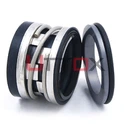
The primary sealing elements form the foundation of any mechanical seal system, creating the critical barrier between the process fluid and the atmosphere. These comprise two main components: a stationary seal face attached to the housing and a rotating seal face affixed to the shaft. In cartridge mechanical seals, these components are precision-engineered and pre-assembled to ensure consistent performance and simplified installation procedures. The rotating seal face, typically made from materials such as carbon graphite or silicon carbide, rotates with the equipment shaft and maintains constant contact with the stationary face. The stationary seal face, commonly constructed from ceramic, tungsten carbide, or other hard materials, remains fixed within the seal housing. The interaction between these faces creates the primary seal interface, where proper surface finish, flatness, and material compatibility are essential for leak prevention and extended service life.
Secondary Sealing Elements in Cartridge Mechanical Seals
Secondary sealing elements play a vital role in containing the process fluid behind the primary sealing faces. These components include O-rings, gaskets, and other elastomeric elements that provide static seals between non-moving parts. In cartridge mechanical seals, secondary sealing elements are strategically positioned to prevent bypass leakage around the seal components while accommodating thermal expansion and equipment misalignment. The selection of secondary sealing materials depends on the specific application requirements, including temperature range, chemical compatibility, and pressure conditions. Common materials include nitrile rubber (NBR), fluoroelastomers (FKM), and perfluoroelastomers (FFKM) for high-temperature and aggressive chemical applications. Proper sizing and material selection of these elements are crucial for maintaining seal integrity throughout the equipment's operational lifecycle.
Spring Loading Mechanisms and Their Functions
These springs and loading mechanisms can take the form of a large diameter single spring, multiple smaller diameter springs, leaf springs, wave springs or a metal or elastomeric bellows. In cartridge mechanical seals, the spring loading mechanism maintains optimal contact force between the sealing faces throughout various operating conditions, including pressure fluctuations, thermal cycling, and normal wear progression. The spring system compensates for face wear by continuously adjusting the axial position of the rotating seal face, ensuring consistent contact pressure and sealing performance. Different spring configurations offer specific advantages: single coil springs provide uniform loading and simple design, multiple springs offer redundancy and better load distribution, while bellows assemblies provide both loading force and secondary sealing functions in a single component.
Comprehensive Types of Mechanical Seals and Their Applications
Component vs. Cartridge Mechanical Seals: Design Differences
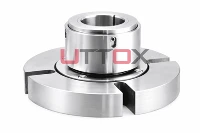
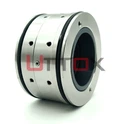
Component mechanical seals are composed of separate dynamic and stationary parts. Unlike cartridge seals, component seals are not preassembled and require skilled technicians to install them. This fundamental difference affects installation complexity, maintenance requirements, and overall reliability in industrial applications. Component seals offer flexibility in design and can be customized for specific applications, but they require precise installation procedures, proper setting calculations, and experienced technicians for optimal performance. Each component must be individually positioned, measured, and adjusted during installation, creating multiple opportunities for installation errors that can lead to premature failure or inadequate sealing performance. Cartridge mechanical seals, conversely, arrive as pre-assembled units with all components properly positioned and preset by the manufacturer. A cartridge-mounted, end-face mechanical seal is a self-contained unit that houses the sealing components-a gland, sleeve, and hardware. A cartridge seal allows the unit to be preassembled and preset by the manufacturer. This design approach eliminates installation variables, reduces maintenance time, and ensures consistent performance across multiple installations.
Single and Dual Cartridge Mechanical Seals Configuration
Single cartridge mechanical seals provide cost-effective sealing solutions for standard applications where the process fluid is compatible with the seal materials and environmental release is acceptable in case of primary seal failure. These seals rely on a single barrier between the process and atmosphere, making proper material selection and seal face compatibility critical for successful operation. Dual cartridge mechanical seals incorporate two sets of sealing faces with a barrier fluid system between them, providing enhanced safety and reliability for hazardous or valuable process fluids. The barrier fluid system prevents process contamination and provides early warning of primary seal wear through monitoring systems. This configuration is essential for applications involving toxic chemicals, high-value products, or environmental regulations requiring zero emissions.
Balanced vs. Unbalanced Cartridge Mechanical Seals
Balanced cartridge mechanical seals incorporate design features that reduce the hydraulic forces acting on the sealing faces, allowing them to operate effectively at higher pressures and with reduced face loading. The balance is achieved through careful design of the seal face geometry and hydraulic diameter, creating a hydraulic force that partially counteracts the process pressure. Unbalanced seals experience the full process pressure across the sealing faces, which can lead to excessive face loading, increased wear rates, and heat generation at higher pressures. However, unbalanced designs offer simplicity, lower cost, and adequate performance for low-pressure applications where the hydraulic forces remain within acceptable limits for the seal face materials and spring loading system.
Material Selection and Performance Considerations for Cartridge Mechanical Seals
Hard Face Materials and Their Properties
The selection of hard face materials significantly impacts the performance and longevity of cartridge mechanical seals. Silicon carbide offers excellent wear resistance, thermal conductivity, and chemical compatibility, making it ideal for abrasive services and high-temperature applications. Tungsten carbide provides superior hardness and wear resistance but requires careful consideration of thermal expansion and brittleness characteristics. Ceramic materials, including aluminum oxide and silicon nitride, offer excellent corrosion resistance and dimensional stability but may be susceptible to thermal shock in rapid temperature cycling applications. The combination of different hard face materials can optimize performance by pairing a harder primary face with a softer secondary face, promoting proper run-in characteristics and accommodating minor misalignments.
Soft Face Materials and Carbon Grades
Carbon graphite remains the most widely used soft face material in cartridge mechanical seals due to its self-lubricating properties, thermal conductivity, and ability to conform to mating surfaces. Different carbon grades offer varying characteristics: resin-impregnated carbons provide improved strength and chemical resistance, while antimony-impregnated grades offer enhanced thermal conductivity for high-speed applications. Carbon-graphite faces require careful consideration of the operating environment, as they can be sensitive to dry running conditions and may experience oxidation at elevated temperatures in oxidizing atmospheres. Alternative soft face materials, including filled PTFE and specialty composites, provide solutions for specific applications where carbon compatibility or performance limitations exist.
Installation and Maintenance of Cartridge Mechanical Seals
Pre-Installation Considerations and Preparations
Proper preparation before installing cartridge mechanical seals is essential for achieving optimal performance and service life. Equipment condition assessment should include shaft runout measurement, housing bore inspection, and stuffing box dimension verification to ensure compatibility with the seal design requirements. Any existing damage or wear must be addressed before seal installation to prevent premature failure. Process conditions review includes verifying operating pressures, temperatures, and fluid characteristics against the seal specifications. Piping system evaluation should confirm adequate support, proper alignment, and appropriate flush or barrier fluid systems where required. Environmental factors such as ambient temperature, humidity, and contamination sources should also be considered in the installation planning process.
Operational Monitoring and Maintenance Practices
Effective monitoring systems for cartridge mechanical seals include vibration analysis, temperature measurement, and leakage detection to identify potential issues before catastrophic failure occurs. Baseline measurements during initial startup provide reference points for trend analysis and predictive maintenance programs. Regular monitoring allows for planned maintenance activities and minimizes unscheduled downtime. Maintenance practices should include periodic inspection of auxiliary systems such as flush lines, barrier fluid systems, and cooling water circuits. Documentation of operating conditions, maintenance activities, and seal performance creates valuable data for optimizing seal selection and improving reliability in future applications. Proper storage and handling procedures for spare seals ensure their condition remains acceptable for emergency installations.
Conclusion
Understanding the parts and types of mechanical seals, especially cartridge mechanical seals, is fundamental for industrial equipment reliability and performance. The comprehensive knowledge of sealing components, configurations, and materials enables optimal selection and maintenance practices that prevent costly failures and ensure operational efficiency across diverse industrial applications.
Cooperate with Zhejiang Uttox Fluid Technology Co.,Ltd.
Zhejiang Uttox Fluid Technology Co.,Ltd., established in 1990, brings over 30 years of manufacturing excellence as a leading China cartridge mechanical seals factory and China cartridge mechanical seals supplier. Our experienced R&D team provides technical guidance and customization solutions for different working conditions, serving customers in over 50 countries across petroleum refining, water treatment, pulp & paper, shipbuilding, food & beverage, pharmacy, and power plant industries.
As a trusted China cartridge mechanical seals manufacturer offering competitive cartridge mechanical seals price and cartridge mechanical seals for sale, we provide high quality cartridge mechanical seals with sufficient inventory for fast delivery. Our professional technical team offers free technical support, OEM services, and quality assurance through independent quality control. Partner with us as your reliable China cartridge mechanical seals wholesale supplier. Contact info@uttox.com for inquiries and technical consultation.
FAQ
Q: What is the main difference between cartridge and component mechanical seals?
A: Cartridge mechanical seals are pre-assembled units with preset components, while component seals require field assembly of separate parts by skilled technicians.
Q: Which materials are commonly used for mechanical seal faces?
A: Hard faces typically use silicon carbide, tungsten carbide, or ceramic, while soft faces commonly use carbon graphite with various impregnations.
Q: How do balanced mechanical seals differ from unbalanced ones?
A: Balanced seals reduce hydraulic forces on sealing faces for higher pressure applications, while unbalanced seals experience full process pressure across the faces.
Q: What are the key factors in selecting mechanical seal materials?
A: Temperature range, chemical compatibility, pressure conditions, abrasive content, and required service life are primary selection criteria.
References
1. Mechanical Seals: Design and Application - Author: John H. Netzel - Comprehensive guide covering mechanical seal principles, design considerations, and application guidelines for industrial equipment.
2. Pump Handbook: Fourth Edition - Authors: Igor J. Karassik, Joseph P. Messina - Authoritative reference including detailed chapters on mechanical seal selection, installation, and maintenance practices.
3. Industrial Sealing Technology: Principles and Applications - Author: Heinz K. Müller - Technical manual addressing sealing mechanisms, material properties, and performance optimization in mechanical seal systems.
4. Centrifugal Pumps: Design and Application - Authors: Val S. Lobanoff, Robert R. Ross - Engineering textbook with extensive coverage of mechanical seal integration, system design, and operational considerations.